Welcome to ICSCCC 2026

Track(s)

The field of computing and communication has witnessed remarkable growth over the past two decades, evolving across diverse dimensions. Computing encompasses the design, development, and implementation of both hardware and software systems; the processing, structuring, and management of vast amounts of information; scientific research utilizing computational models; the development of intelligent systems; and the creation of advanced communication and entertainment technologies. This vast domain spans multiple disciplines, including computer engineering, software engineering, computer science, information systems, and information technology—each continuously expanding with emerging innovations and applications. Communication, at its core, is the process of exchanging information, ideas, and meanings between entities through mutually understood symbols and rules. Its applications extend across numerous domains, including network communications, cybersecurity, and beyond, playing a crucial role in modern interconnected systems. To streamline discussions and research contributions, the conference is organized into the following tracks:

  • Track 1: Cyber Security
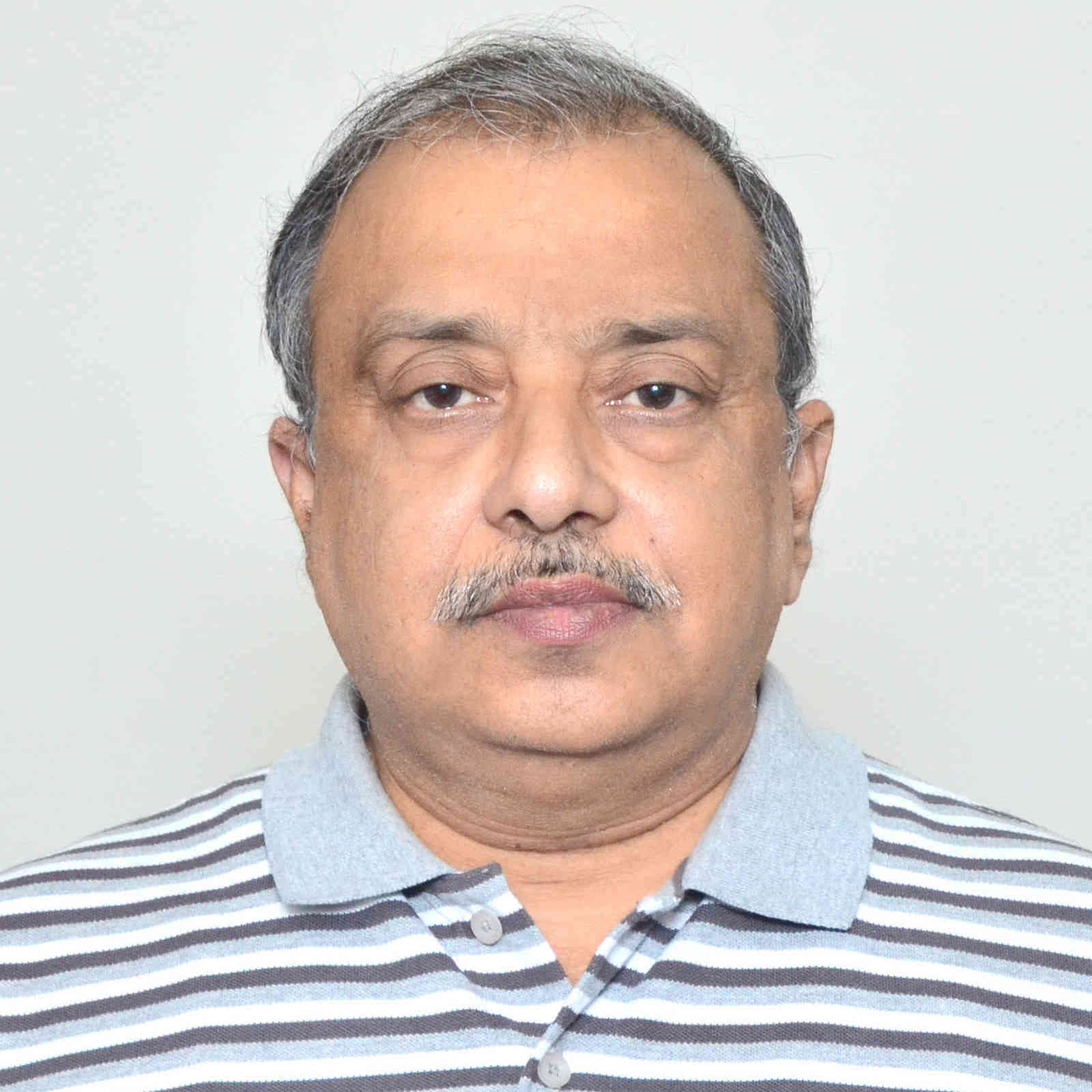
  • Track Chair: Prof. Mayank Dave, Professor, NIT Kurukshetra, Kurukshetra, Haryana, India

  • Track 2: Secure Software Systems
  • Track Chair: Dr.Sanjeev Sofat , Professor, PEC, Chandigarh, India

  • Track 3: Machine Intelligence
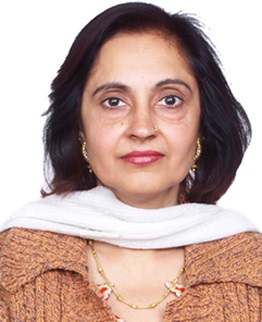
  • Track Chair: Prof. Sanjay Kumar Singh , Professor, IIT BHU, India

  • Track 4: Cloud & Data Analytics
  • Track Chair: Prof. R. K. Pateriya, Professor, MANIT Bhopal, India

  • Track 5: Computer Networks & Security
  • Track Chair: Prof. Satish Chand, Professor, Jawaharlal Nehru University, New Delhi, India

Cyber Security

This track delves into emerging research areas in cybersecurity, privacy, and digital trust amid evolving cyber threats and attack vectors. Topics include next-generation cybersecurity frameworks, quantum-resistant cryptography, AI-driven threat detection, zero-trust architectures, federated learning for security, and privacy-enhancing technologies (PETs), security in blockchain technologies, secure federated computing, ransomware mitigation, and advanced intrusion detection/prevention. It will also explore cyber resilience for critical infrastructures, adversarial AI security, cyber-physical system (CPS) security, and AI-enabled cyber threat intelligence. Additionally, this track emphasizes on some other research areas cyber hacking, digital forensics, intrusion detection and prevention, cyberspace protection and anti-malware, identity and access management in cyber systems, security of cyber-physical systems and IoT, secure cloud and edge computing architectures, security of web-based applications, and cyber harmony and cyber welfare.

Secure Software Systems

This track emphasizes on security in Software systems which is an active area of research for groups interested in software engineering in particular and systems engineering. This track focuses on security in software systems and DevSecOps—an essential research area in software engineering. Topics include secure coding practices, AI-assisted vulnerability detection, automated security testing, and security by design. Special attention is given to static and dynamic code analysis, model-driven security, security-aware software development life cycle (SDLC), secure APIs and microservices, and blockchain-based software integrity validation. Other areas include agile security methodologies, security in continuous integration/continuous deployment (CI/CD) pipelines, self-healing software systems, threat modelling techniques, secure cloud-native application development, and runtime application self-protection (RASP).


Machine Intelligence

This track explores advancements in artificial intelligence (AI), machine learning (ML), and computational intelligence for next-generation applications. It covers deep learning, explainable AI (XAI), foundation models, transformers, reinforcement learning, and generative AI models (e.g., GPT, DALL·E, diffusion models). Additional topics include neurosymbolic AI, quantum machine learning, probabilistic graphical models, autonomous decision-making, AI-powered cybersecurity, multi-agent systems, and evolutionary computation. The track also includes research on neuromorphic computing, federated and swarm learning, edge AI, and ethical AI frameworks to address fairness, bias, and trustworthiness in intelligent systems.


Cloud & Data Analytics

This track emphasizes innovations in cloud computing, distributed computing, quantum computing, and data-driven analytics. It includes cloud quality management and service level agreement, cloud migration, cloud virtualization and composition, high performance cloud computing, green cloud computing, economics, business and Return on Investment (ROI) models for cloud computing, innovative cloud applications, serverless computing, edge-cloud synergy, confidential computing, AI-optimized cloud orchestration, and cloud-native security solutions. Key discussions include privacy-aware data analytics, federated data sharing, big data security, real-time stream processing, and sustainable cloud computing. The track also covers quantum computing algorithms, post-quantum cryptography (PQC), hybrid quantum-classical computing models, AI-powered cloud automation, blockchain in cloud security, and cloud resilience strategies for high-assurance computing.

Computer Networks & Security

This track focuses on next-generation network architectures, security, and intelligent communication technologies. Topics include 6G networks, terahertz (THz) communication, quantum key distribution (QKD), AI-driven network security, software-defined networking (SDN), and network slicing. It also covers privacy-preserving techniques for IoT, and secure multi-party computation, wireless networks, energy efficient networking, internet architecture and protocols, traffic analysis, content centric networks. Special emphasis is placed on vehicular networks (VANETs), drone-based ad hoc networks (FANETs), smart grid communication, IoT security, and privacy-aware routing protocols. Emerging areas such as blockchain-based networking, satellite-based 4G/5G/6G & advanced connectivity, and AI-driven cyber threat hunting in networks will also be explored. Besides these, other areas shall include Intrusion Detection and Prevention, Firewalls, Packet Filters, Malware Analysis, Web and Information Security, Attacks and Defence, Communication Privacy and Anonymity, Blockchain Technologies, Circumvention and Anti-Censorship Technologies, Network and Internet Forensics Techniques, Authentication Systems, Routing protocols and Algorithms, Naming/Addressing, Network Management, VoIP, Communication Engineering.

Call for Papers

PAPERS ARE INVITED FOR ICSCCC 2026 FROM THE FOLLOWING AREAS
(BUT NOT LIMITED TO IT):-

1. Cyber Security

  • Cyber Rights, Policy, Laws and Ethics
  • Security standardization
  • Threats in cyberspace
  • Software Testing and Quality Assurance
  • Network traffic analysis
  • Cryptography
  • Trust Management
  • Cyber harmony
  • Secure web-based applications


2. Secure Software Systems

  • Intelligent Service Level Agreement (SLA) and Quality assurance
  • Security aspects of Software Deployment
  • Processes for development of secure software systems
  • Agile Methods
  • Software Testing and Quality Assurance
  • Mining Software Repositories
  • Self Adaptive System
  • System Modeling and Simulation
  • Model Driven Development
  • Mobile and web Applications


3. Machine Intelligence

  • Deep Learning
  • Meta Learning and Algorithm Selection
  • Time series prediction and forecasting
  • High reliability and error tolerance in AI
  • Cognitive Computing
  • Audio / Video Recognition
  • The Machine Learning / AI intersection
  • Recommender systems, computational advertising, multimedia, finance, bioinformatics


4. Cloud and Data Analytics

  • Cloud security
  • Intelligent Service Level Agreement (SLA) and Quality assurance
  • Cloud at the Edges and Mobile cloud
  • Data privacy
  • Spatial Mobility, geo-location and management
  • Hybrid cloud infrastructure for IoT
  • Security in IoT and edge cutting technologies
  • Optimization of data traffic, latencies and Reliability of cloud
  • Analyzing scientific and business data
  • Mining sequences, streams, text, web, graphs, rules, patterns, logs data, spatio-temporal data, biological data


5. Computer Networks and Security

  • Software defined network protocols
  • SDN security and privacy
  • IoT based data acquisition, knowledge management and semantics
  • Data models, Tiny/small databases for IoT devices
  • Wireless networks for IoT and Cloud
  • Intelligent resource virtualization
  • Machine-to-Machine(M2M) Communication
  • IoT security and Trust management
  • Vehicle-to- Everything (V2X) Communications
  • Green vehicular communications and networking

Keynote Speaker(s)

Prof. Bharat K Bhargava

Professor
Purdue University,
West Lafayette, Indiana

View Profile

Prof. Upendranatha Sharma Chakraborty

Professor
University of Texas,
USA

View Profile

Prof. Anjali Awasthi

Professor
Concordia University,
Montreal, Canada

View Profile

Prof. Manoj Mishra

Professor
IIT Roorkee

View Profile

Prof. Lalit Kumar Awasthi

Vice Chancellor
Sardar Patel University,
Mandi (H.P.)

View Profile

Submission Rules

  • All the papers submitted to the conference should be written in English with the maximum page length of six printed pages (10pt font).
  • Authors should submit their original unpublished work in PDF format to ICSCCC 2026.
  • Simultaneous submissions (papers already submitted to other conferences/journals) are not allowed.
  • The length of the paper should be limited to six pages only.
  • Submission should strictly follow recommended IEEE conference template, which can be found here.
  • The decision regarding the acceptance of paper is at the discretion of Technical Program Committee.
  • Plagiarism Check using Turnitin.
  • All the paper submission will be done on Microsoft CMT conference management software.
  • The Microsoft CMT service was used for managing the peer-reviewing process for this conference. This service was provided for free by Microsoft and they bore all expenses, including costs for Azure cloud services as well as for software development and support.

  • Paper Submission: Click Here
  • Accepted papers will be submitted for inclusion into IEEE Xplore subject to meeting IEEE Xplore’s scope and quality requirements

  • Registration Form:
    Link will be updated soon
  • Paper should be in proper IEEE format.
  • PDF of paper should be generated in IEEE Xplore compatible format.


  • The registration fees for National Authors/Participants are as follows:

    Sr. No. Registration Type IEEE Member Non-IEEE Member
    1. Academician / Researcher ₹ 7000 ₹ 8500
    2. Students ₹ 6000 ₹ 7500
    3. Attendees ₹ 3000 ₹ 3500
  • The registration fees for International Authors/Participants are as follows:

    Sr. No. Registration Type IEEE Member Non-IEEE Member
    1. Academician / Researcher $ 300 $ 350
    2. Students $ 200 $ 250
    3. Attendees $ 100 $ 150


Chief Patron

Prof. B K Kanaujia

Director
NIT Jalandhar

Executive General Chair

Prof. A L Sangal

Professor & Head CSE Department
NIT Jalandhar

General Chair(s)

Prof. Harsh Verma

Professor, NIT Jalandhar
India

Prof. Renu Dhir

Professor, NIT Jalandhar
India

Conference Chair(s)

Dr Samayveer Singh

Assistant Professor, NIT Jalandhar
India

Dr Urvashi

Assistant Professor, NIT Jalandhar
India

Convenor

Dr Krishna Pal Sharma

Assistant Professor, NIT Jalandhar
India

Dr Amritpal Singh

Assistant Professor, NIT Jalandhar
India

Dr Sumit Kumar

Assistant Professor, NIT Jalandhar
India

Secretary

Dr Rajneesh Rani

Associate Professor, NIT Jalandhar
India

Dr Aruna Malik

Assistant Professor, NIT Jalandhar
India

Dr Shefali Arora Chouhan

Assistant Professor, NIT Jalandhar
India

© 2026 ICSCCC . All rights reserved | Design by Sargunjot Singh, Kartik Singh , Krishna Ranjan